The hidden science of the coconut
How the coconut's molecular structure challenges nutrition's labels and surprises dermatology.
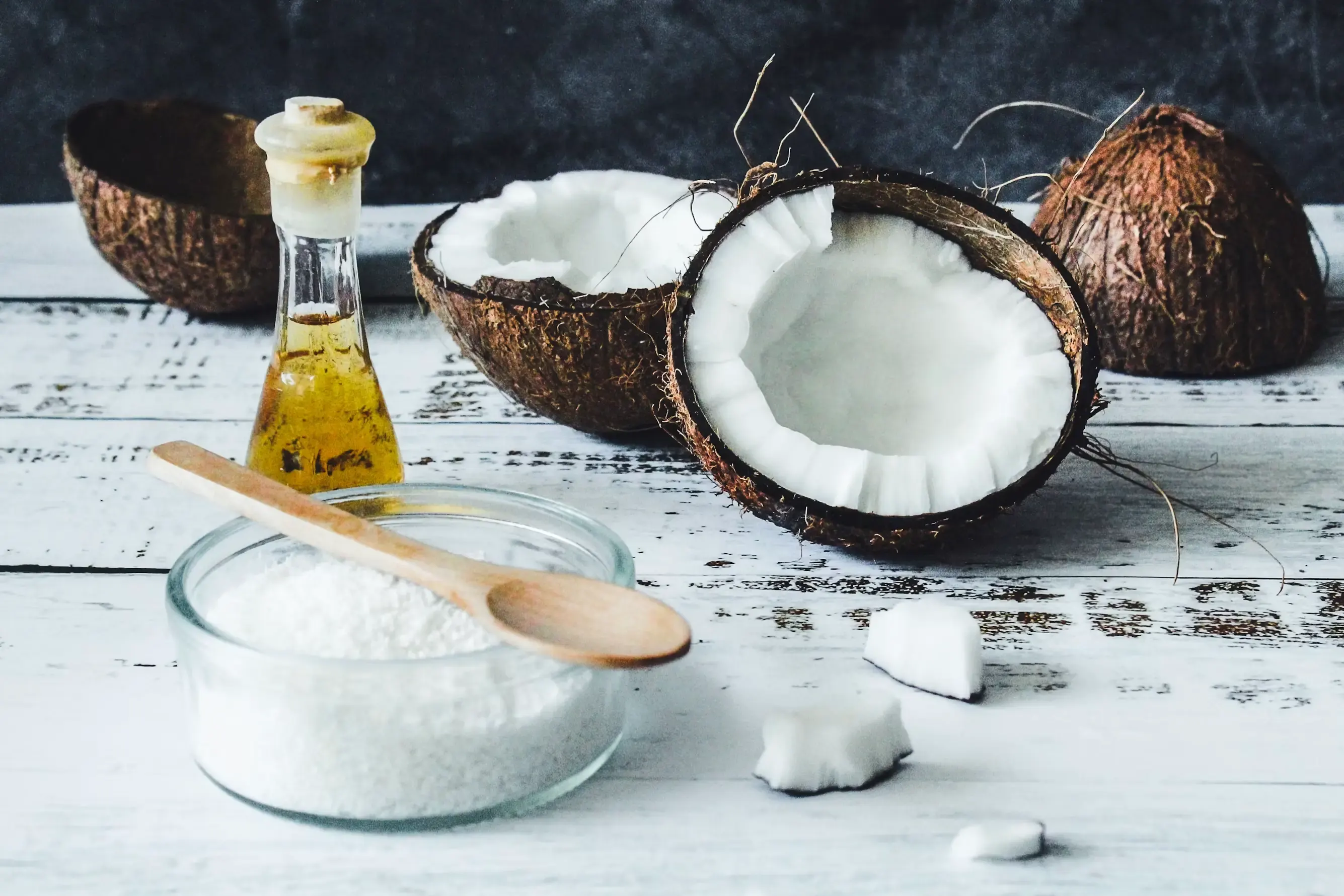
The coconut (Cocos nucifera) is a born survivor. Its fruits can float for months in the ocean’s salt water, drift thousands of kilometres and then run aground on a deserted beach and germinate successfully. Yet its real capacity for adaptation lies not at sea but in laboratories. For decades this fruit has been at the centre of fierce scientific debate: demonized by some as a threat to the arteries and crowned by others as the ultimate «superfood». Modern science invites us to step away from the extremes: neither poison nor miracle, the coconut is a fascinating biological and chemical chameleon whose structure hides secrets most people are unaware of.
Confusing botany and battlefield medicine
To begin with, the coconut suffers a popular identity crisis. Although its English name evokes a nut, botanically it isn’t one: it’s a fibrous single-seeded drupe, which makes it a direct relative of peaches, plums and olives. What we eat as white flesh is, technically, the endosperm: the tissue that nourishes the plant’s embryo during its sea voyage.
That interior is so rich and efficient that it has saved lives in extreme contexts. During the Second World War, on the isolated Pacific fronts, field doctors resorted to a desperate measure: using the water of young coconuts as an intravenous substitute for blood plasma. Sealed inside the fruit, the water is sterile, has a pH compatible with the human body and an electrolyte profile —especially potassium— astonishingly similar to that of our blood. Although modern medicine now advises against it routinely because of its low sodium content and its acidity, that historical resort shows the fruit’s biochemical complexity.
Biochemical engineering: the molecular maze of lauric acid
The real scientific debate simmers in its oil, made up of 90% saturated fats. The usual defence of coconut oil is that it’s made of medium-chain triglycerides (MCTs), which are absorbed quickly and go straight to the liver to be turned into pure metabolic energy. But under the microscope, the molecular reality is far more nuanced.
The key lies in the length of the carbon chains of its fatty acids. Coconut oil contains a mix of four kinds of MCT: caproic acid (C6), caprylic acid (C8), capric acid (C10) and the predominant lauric acid (C12), which accounts for about 47% of the total. C8 and C10 are the gold standard of the medium chain: highly water-soluble, they travel directly through the portal vein to the liver, where they undergo rapid beta-oxidation to produce immediate energy and ketone bodies.
Lauric acid (C12), however, is a metabolic hybrid. With its 12 carbon atoms, it sits right at the physicochemical border between the medium chain and the long chain (LCFA, ≥C14). Because of this singularity, cellular biochemistry processes it in two ways at once:
- The fast portal route: a smaller fraction behaves like an MCT and provides quick cellular energy.
- The slow lymphatic route: about 70% of the lauric acid is packaged in the intestine’s enterocytes as chylomicrons and enters the lymphatic system exactly like saturated fats of animal origin.
This molecular duality explains why coconut oil doesn’t act like a purified MCT-oil supplement (which contains only C8 and C10). Absorbed mainly by the lymphatic route, lauric acid interacts with liver receptors and raises both HDL and LDL cholesterol at the same time. Coconut oil is therefore, in essence, a saturated fat with unique kinetic properties, whose real impact on cardiovascular health depends on each person’s genetic context and overall diet.
A molecular shield against bacteria and cavities
Where science has no doubts is in the coconut’s antimicrobial power. When we consume its oil, the body turns lauric acid into a compound called monolaurin. Both monolaurin and caprylic acid act as «solvents» of the lipid membranes of various pathogens.
Under the microscope, these fatty acids have been shown to alter the cell wall of the bacterium Streptococcus mutans, the main culprit behind tooth decay. In fact, the traditional oil rinse (oil pulling) has shown in clinical trials an ability to inhibit bacterial adhesion to enamel and to reduce bacterial colonies in saliva comparable to that of commercial chlorhexidine, with the advantage of not staining teeth or altering the sense of taste.
From the lab to aesthetics: hair and skin engineering
If we move from the digestive system to dermatology, coconut oil stands out again for its molecular physics. Most commercial cosmetic oils —such as argan or jojoba— have complex, hydrophobic, very-long-chain molecular structures that stay only on the surface of the hair (the cuticle) and add a temporary shine.
Coconut oil, being a triglyceride made up mostly of lauric acid, has a straight linear structure and a very low molecular weight. That configuration gives it a unique chemical affinity with the hair’s native proteins (keratin) and lets it penetrate deep into the hair cortex. Settling inside the fibre, it acts as a hydrophobic shield that drastically reduces protein loss, both in healthy hair and in hair damaged by chemical or thermal processes. On the skin, its role isn’t to «add water» but to act as a humectant and occlusive agent: it seals the skin’s lipid barrier, keeps internal water from evaporating and protects against common fungi such as Candida.
Science’s verdict
The coconut and its oil are the perfect example of why nutrition and biology don’t allow absolute answers. In the kitchen, its high oxidative stability makes it an excellent ally for withstanding high temperatures without degrading. On skin and hair, it’s a natural engineering repairer. And in the diet, it’s a source of quick energy to be consumed in moderation, without ever displacing the undisputed king of cardiovascular health: extra-virgin olive oil. In the end, the coconut’s secret isn’t that it’s a miracle cure, but that it’s a masterpiece of evolutionary biochemistry.
References and scientific backing
- Absorption and hybrid metabolism of fatty acids. The kinetic and lymphatic behaviour of lauric acid versus other medium-chain triglycerides is detailed in the Creative Proteomics article on fatty acids and in the randomized clinical trial published in the Journal of Nutrition, available at PubMed Central (PMC11773652). The breakdown of MCT types is in the Healthline review.
- Hair affinity and protein protection. The classic study that demonstrated lauric acid’s penetration into the hair cortex compared with mineral oils is indexed at PubMed (ID: 12715094).
- Antimicrobial effect on oral health. The in vivo trial equating the efficacy of coconut-oil rinsing with chlorhexidine against Streptococcus mutans is available at PubMed Central (PMC5109859) and indexed at PubMed (ID: 27084861).
- Historical use of coconut water intravenously. The analysis of the fruit’s electrolyte composition in emergency situations is documented at Global Health Perspectives.
Hook this up to your favourite commenting platform — Giscus, Disqus, or your own.
Continue reading
Real meat vs. industrial «meat»
How intensive farming altered the biology of ruminants and turned an ancestral food into a health and environmental problem.

The truth about antioxidants
The biology behind our real defence network against oxidative stress.

What did I come in here for?
What science says about those small everyday lapses that prove your mind is (far too) efficient.